

expedia
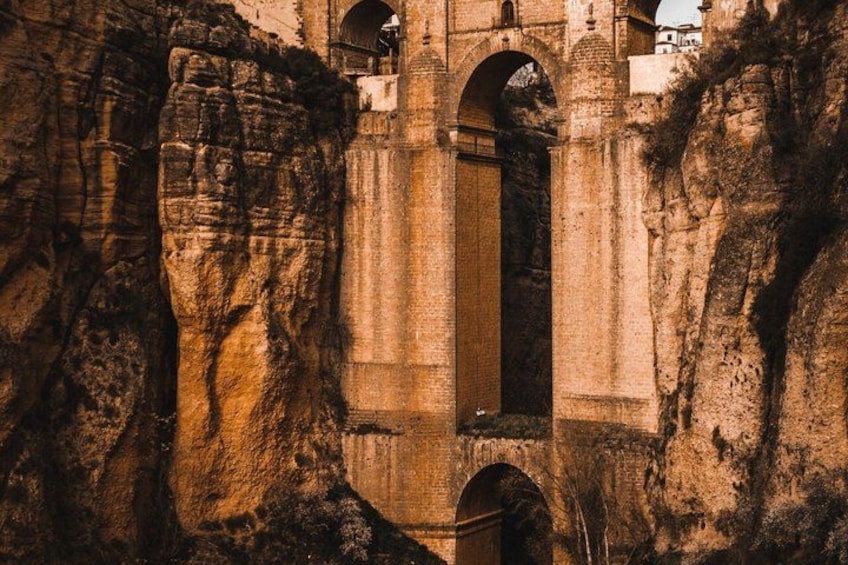
A historical stone bridge with arches, set against a rocky cliff. 1
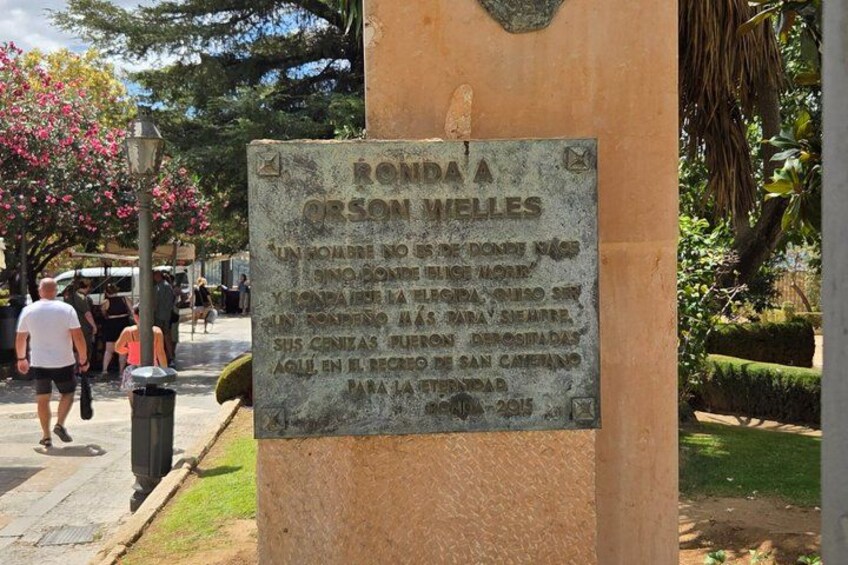
A stone plaque with inscriptions, a paved walkway, and a person walking in the background. 2
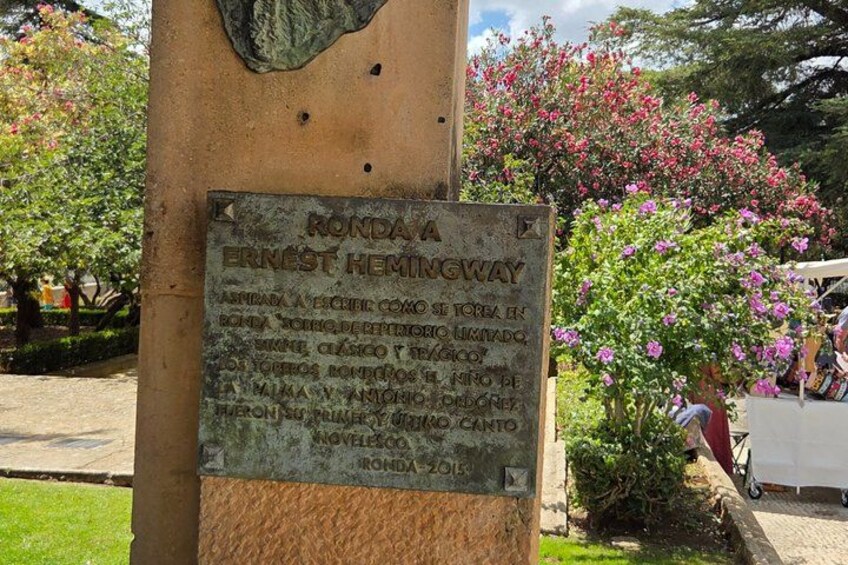
A plaque on a column with text in a foreign language, surrounded by greenery and flowers. 3
A statue of a muscular figure in a classical pose, a fountain, and a building with ornate architecture. 4
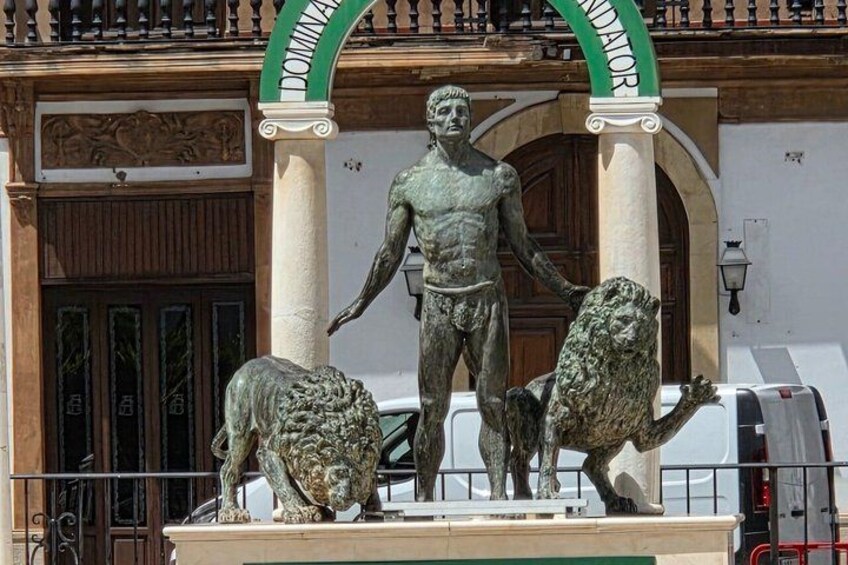
A statue of a man with two animals, a lion and a bear, in front of a building with a green archway. 5
By VivaMalagaTours

Features

  • Mobile voucher
  • Instant confirmation

Overview

  • Discover the picturesque city of Ronda, famous for its impressive cliffs and spectacular views. Enjoy a guided tour of the rich history of Ronda, including its iconic bullring and the impressive Puente Nuevo. The tour is conducted in a single language, for a clear experience without long translation breaks. With comfortable transport from Malaga, fewer pickup stops to enjoy more time at the destination, and an expert guide, you will experience the best of this charming city without any stress. During the journey, you will enjoy panoramic viewpoints over the Tajo, stroll through the cobbled streets of the old town, and have free time to explore at your own pace before returning to Malaga. Perfect for families, couples, and travellers looking for an enriching day in Andalusia.

Activity location

  • Ronda
    • Ronda, Spain

Meeting/Redemption Point

  • Estación de Autobuses de Ronda
    • 3 Calle de José María Castelló Madrid
    • 29400, Ronda, Andalucía, Spain

Check availability

Return to your original page

What's included, what's not

  • Inclusions
    Stop to rest at a typical stall in front of Ardales, where we invite you for a coffee or tea and you can buy local products: oil, cheese, honey, and homemade sweets.
  • Inclusions
    We pick you up at the agreed meeting point and travel in a comfortable air-conditioned bus to the destination, return.
  • Inclusions
    At the end of the guided tour, we offer you a glass of wine in a place with spectacular views, including a surprise factor.
  • Exclusions
    Lunch
  • Exclusions
    Entrance to the monuments is not included.
  • Exclusions
    Service charge

Know before you book

    • Infants and small children can ride in a pram or stroller
    • Service animals allowed
    • Public transport options are available nearby
    • Infants are required to sit on an adult’s lap
    • Specialised infant seats are available
    • Suitable for all physical fitness levels
    • This excursion is not recommended for people with difficulty walking long stretches, as the guided tour is done entirely on foot.

Activity itinerary

Ronda

  • 5h
We left Málaga towards the Guadalhorce Valley, passing through Carratraca. In front of Ardales we make a stop for a coffee, while the guide briefly tells you the history of the area. Already in Ronda, the guided tour begins through its most emblematic corners: the Tajo, the Alameda del Tajo, the Paseo del English with its viewpoints over the valley, and the Paseo de Orson Welles. We continue towards the Ronda Viewpoint and the Bullring, one of the oldest in Spain, which we will see from the outside. We cross the New Bridge, a symbol of the city, to enter the old town, with its beautiful whitewashed houses and 18th-century palaces, plus viewpoints over the Tajo and the Church of Santa María la Mayor. We finished the visit in a surprise, but spectacular, corner, with a glass of wine and spectacular views. Afterwards, they will have a minimum of 3 hours of free time to enjoy the city on their own, before returning to Malaga.

Ardales (Pass by)

Ardales is a typically Andalusian white town located in the middle of the Guadalhorce Valley, between the sierras of Ronda and the Antequera depression, surrounded by the reservoirs of the Guadalhorce-Guadalteba complex. It has a past with a lot of history: it was a key defensive enclave during the Muladí rebellion of Omar Ben Hafsun in the 9th-10th centuries, and it was not definitively conquered by Los Cristianos until 1389, when King John I signed a pact there with the Nasrid prince of Granada. Among its main attractions are the Cueva de Ardales, with Palaeolithic rock art from between 14,000 and 18,000 years ago; the medieval castles of Turón and La Peña; the Roman bridge of La Molina; and its proximity to the Desfiladero de los Gaitanes and the Caminito del Rey. Its narrow streets and whitewashed houses give it that typical Andalusian village air.

La cueva de Dona Trinidad Grund (Pass by)

The Cave of Ardales is one of the most important prehistoric caves in Spain. It was discovered by chance in 1821, when an earthquake revealed its entrance, and in 1823 it became the first visitable cave in the country. In 1918 Henri Breuil identified his Palaeolithic paintings and engravings, but the great discovery came in 2018: a study in the journal Science revealed that part of this rock art is more than 66,000 years old, being one of the oldest artistic manifestations in the world, made by Neanderthals, even before the arrival of modern humans in Europe. In total, the cave preserves more than 1,000 motifs (negative handprints, deer, horses, female figures, and abstract signs), in addition to human remains from 5,000 years ago used as burial. Today it is visited in guided and very small groups (maximum 15 people per day, with prior reservation), on a tour of about two hours from the Ardales interpretation centre.

Valle del Guadalhorce, Villa Malaga (Pass by)

The Guadalhorce Valley is one of the nine districts of the province of Málaga, centred around the Guadalhorce River, the most important in the province. It is known as "the orchard of Malaga" or "the garden of Malaga" due to the fertility of its land, the result of centuries of irrigation and river sediments, which made it an ideal area to cultivate the so-called "Mediterranean trinity": wheat, wine, and olive oil. Phoenicians, Greeks, Romans, and Muslims left their mark on the area, and it was precisely the Muslims who perfected the irrigation systems with norias and canals that still support local agriculture today. The region groups eight municipalities—Álora, Alhaurín el Grande, Alhaurín de la Torre, Almogía, Cártama, Coín, Pizarra, and Valle de Abdalajís—, with Coín traditionally being the most important. Combines landscapes of fertile plain with mountain environments, and houses some of the most notable hydraulic infrastructures in the province, such as the El Chorro reservoirs in Álora

Carratraca (Pass by)

Carratraca is a small town in the interior of Málaga, located between the Guadalhorce Valley, the Serranía de Ronda, and the Antequera region, at the foot of the Sierra Blanquilla. Its fame comes from its sulfurous waters, known since Roman times—as proven by Roman coins and the remains of stone baths found next to the spring, then called "Stinky Waters"—and mentioned in writing as early as 1485. After centuries in oblivion, they resurged as a fashionable spa in the 19th century: in 1847, an elegant neoclassical spa was built that attracted figures such as Lord Byron, a great defender of its curative properties, and later King Ferdinand VII and Empress Eugénie de Montijo. Rich in sulphur, calcium, and magnesium, they were used to treat skin conditions, respiratory problems, and rheumatic ailments. Today the historic spa coexists with the Villapadierna Thermas hotel-spa, and the town also has a unique bullring among its attractions.

Cuevas del Becerro (Pass by)

Cuevas del Becerro is a small white town in the interior of Málaga, located north of Ronda (about 22 km) and very close to the Sierra de las Nieves National Park. Its layout, of Mozarabic origin, and its whitewashed houses reflect a past with continuous presence since the Palaeolithic, with remains of Iberians, Romans, and Andalusians: the Roman site of Las Viñas—a villa with ceramic kilns active between the 1st and 6th centuries—and the remains of the Moorish castle of El Castillejo stand out. Among its attractions are the Church of San Antonio Abad and the Moro Cave. A fun fact: the town has the Starlight certification for clear starry sky, with several viewpoints for astronomical observation. It is a traditional agricultural area, known for its goat cheese, olive oil, and sweets like "suspiros."

Location

Activity location

  • LOB_ACTIVITIESLOB_ACTIVITIES
    Ronda
    • Ronda, Spain

Meeting/Redemption Point

  • PEOPLEPEOPLE
    Estación de Autobuses de Ronda
    • 3 Calle de José María Castelló Madrid
    • 29400, Ronda, Andalucía, Spain

Best Deals on Things to Do

Experience the wonders of the world up close with great deals on things to do near and far. Expedia offers one-of-a-kind activities that allow you to explore Ronda your way. Whether you love nature, culture, food or a bit of adventure, we have the perfect activity for you.

Top experiences in Ronda

With so many things to do in Ronda, planning the perfect day out may seem like a daunting task. Expedia is here to take the hassle out of finding the best attractions, tours and activities in Ronda. Families, couples and business travellers can all find the perfect activity in Ronda to create life-long memories with the help of Expedia.