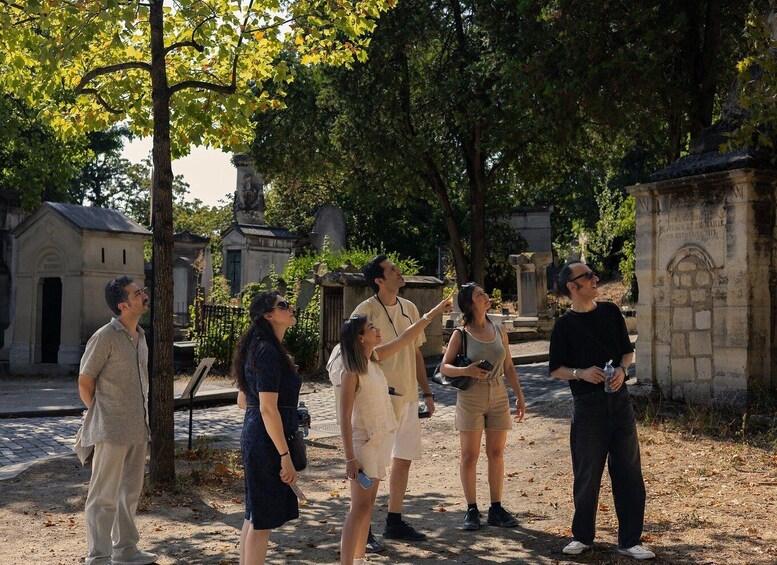
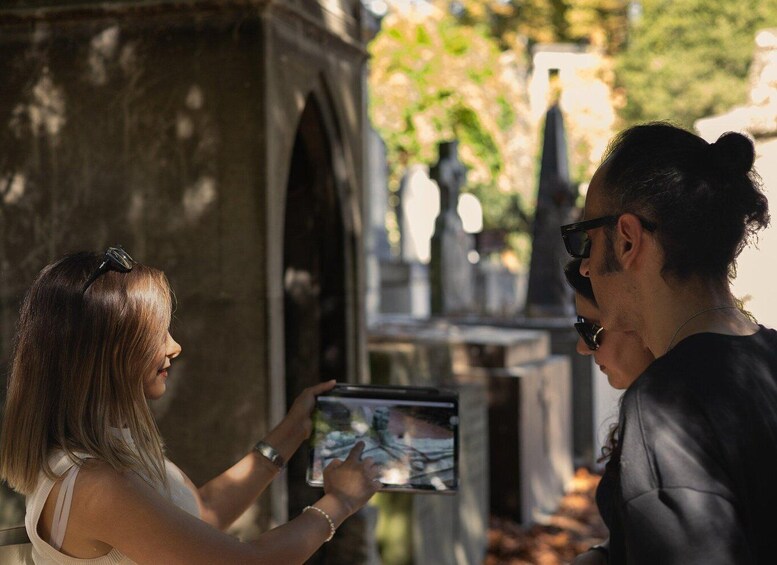
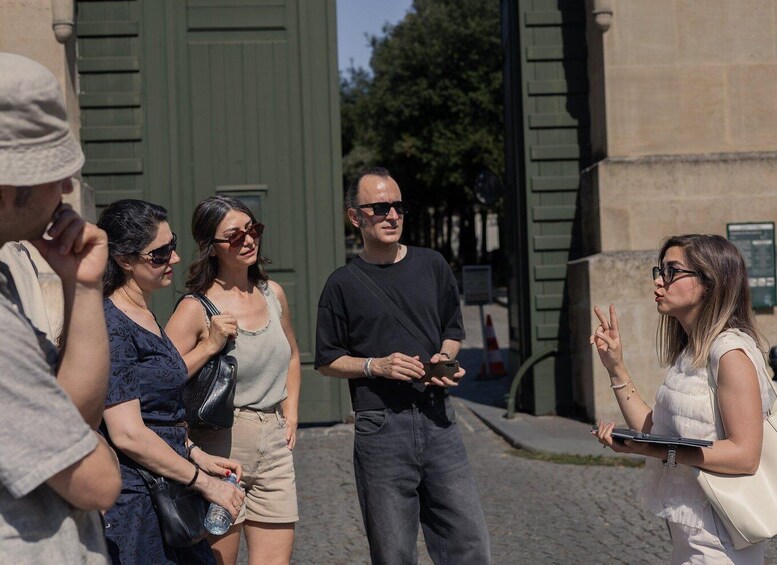
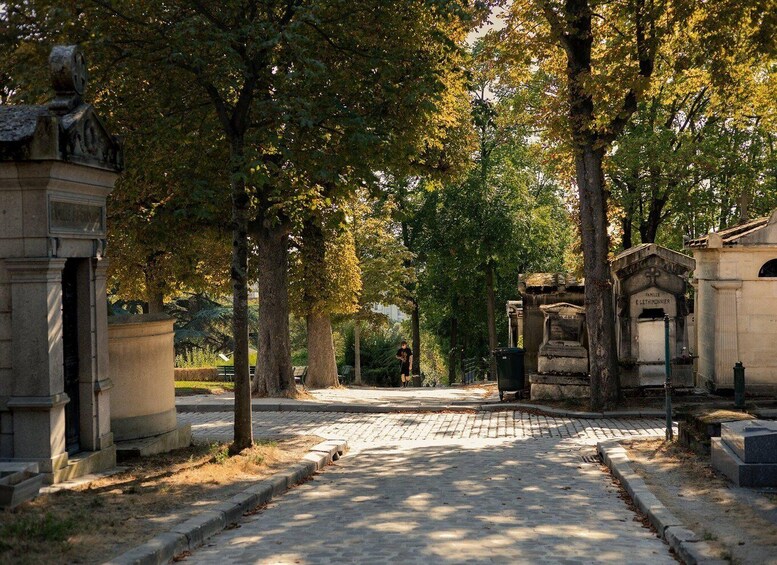
Meet your Side Routes guide outside the Chaize Coffee Shop on Boulevard de Ménilmontant, then step into the largest cemetery in Paris: 44 hectares, more than 70,000 tombs and over three million visitors a year. In a small group of no more than 15, follow the cobbled avenues uphill and discover why this hillside has fascinated Paris for more than two centuries.
Begin with the storey of the cemetery itself. Opened in 1804 by Napoleonic decree and laid out by Alexandre-Théodore Brongniart as an English landscape garden rather than a graveyard, Père Lachaise was at first a failure: nobody wanted to be buried so far from the city. Hear how the reburial of Molière, La Fontaine, Héloïse and Abélard in 1817 turned it into the most desirable address in death in Europe.
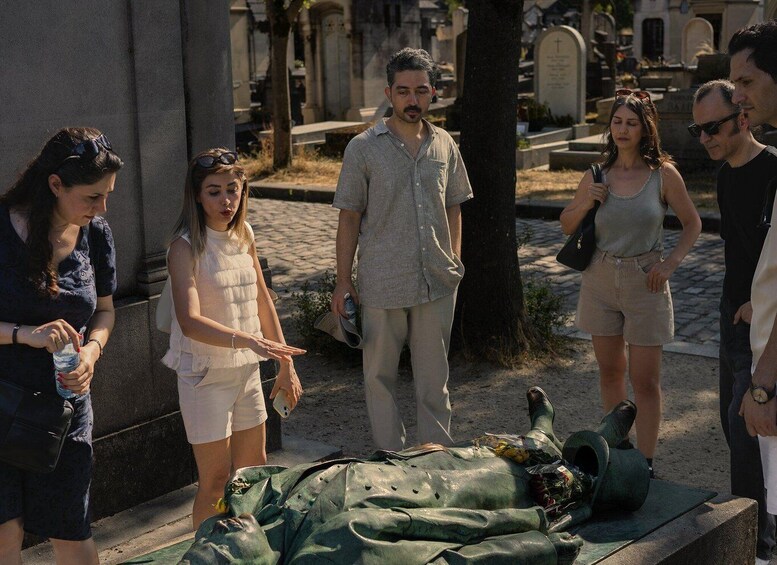
Walk between the famous graves. Stand at Jim Morrison's tomb, the most visited in the cemetery, and hear about the summer of 1971, the Greek inscription and the pilgrims who still come. See Frédéric Chopin's weeping muse and learn why his heart is not in Paris. Find Oscar Wilde's modernist winged sphinx by Jacob Epstein, the scandal it caused and the glass barrier added in 2011. Pay your respects at Édith Piaf's family grave, and see Victor Noir, Fernand Arbelot and other extraordinary sculpted monuments along the way.
Read the architecture as you go. Neo-Gothic chapels, Egyptian Revival obelisks, Haussmann-era family vaults, Art Nouveau ironwork and Art Deco slabs stand within a few hundred metres of each other, and your guide decodes the symbolism carved on them: inverted torches, broken columns, veiled urns and masonic marks. Pause for views across the rooftops of Paris from the upper divisions.
Then follow the cemetery's darker thread. At the dolmen tomb of Allan Kardec, founder of Spiritism, hear how a 19th-century Parisian obsession with the dead began, and why his grave is still the most flower-covered in the cemetery. At the Mur des Fédérés, learn what happened to the last defenders of the Paris Commune in May 1871. Beneath the Byzantine domes of the Columbarium, hear the accounts visitors have reported here for decades: cold spots, failing cameras, shadows and sounds with no source. These are shared as reported experience and local belief rather than fact, and you are free to make up your own mind.
The tour ends at the Gambetta gate beside the métro, after about two hours. Père Lachaise is a working cemetery where funerals take place, and the tour is conducted quietly and with respect throughout.