Spend a full day moving from the quiet forests of Kiyosato to the wild landscapes of the Shiretoko Peninsula.
Begin at JR Shiretoko-Shari Station and head inland towards Kiyosato, with Mount Shari rising over the countryside.
Your first destination is Kaminoko Pond, a small forest pool fed by underground water from the Lake Mashu area. Walk through the woods and see its remarkably clear blue water, fallen trees visible beneath the surface, and the deep green forest surrounding it.
Continue to Uramashu Observatory for a quieter view across the Lake Mashu caldera and Mount Mashu.
Depending on the season, stop at Sakura Falls or the Onnebetsu River. From spring through late summer, Sakura Falls offers a forest waterfall setting, with cherry salmon sometimes seen attempting to leap upstream during the migration season. From September to November, the route instead visits the Onnebetsu River.
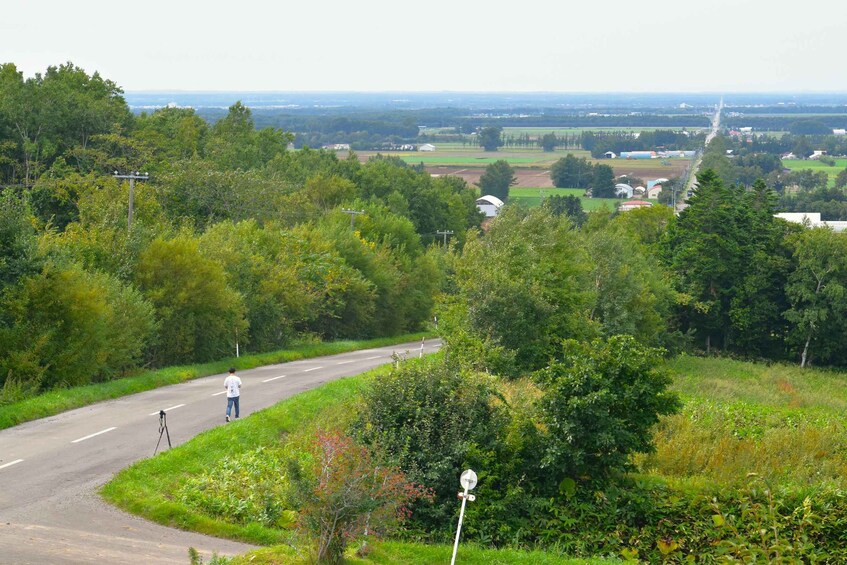
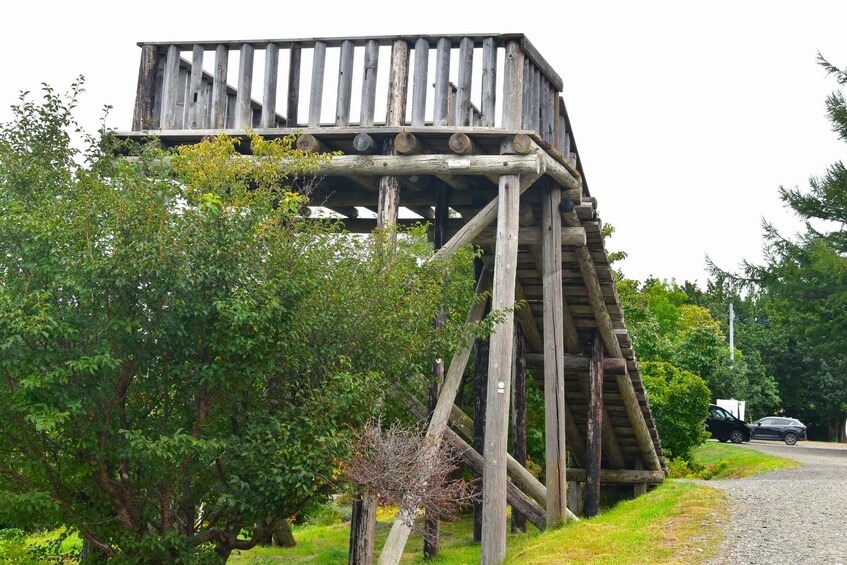
Continue through Kiyosato’s rural landscape, including a panoramic viewpoint, before stopping for lunch.
In the afternoon, travel towards the Shiretoko Peninsula.
Stop along the Road to the Sky, a long straight road stretching towards the horizon, before reaching Oshinkoshin Falls, where water cascades down a broad rock face close to the Okhotsk coast.
Continue deeper into Shiretoko and, when road conditions allow, visit Shiretoko Pass for views towards Mount Rausu and the surrounding mountains.
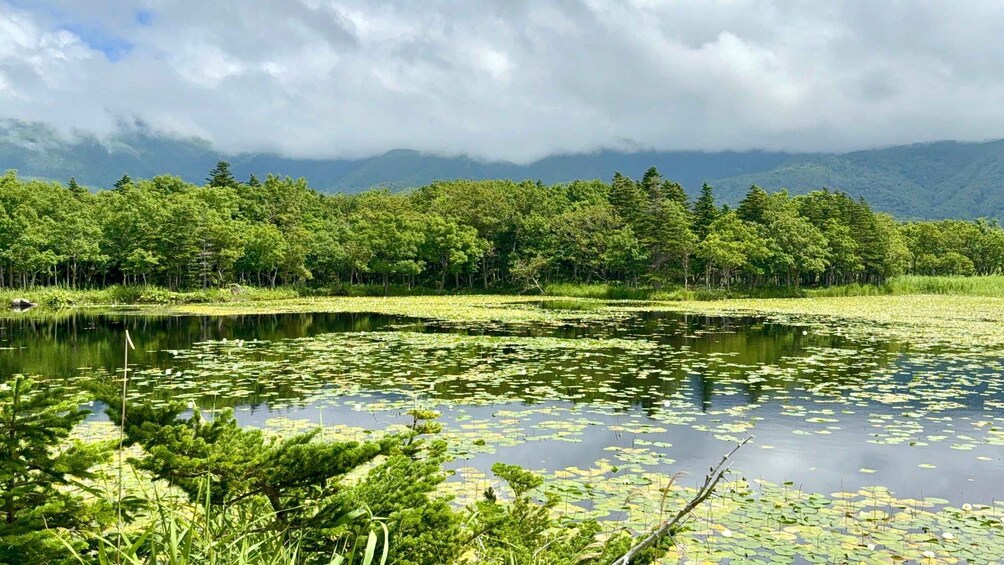
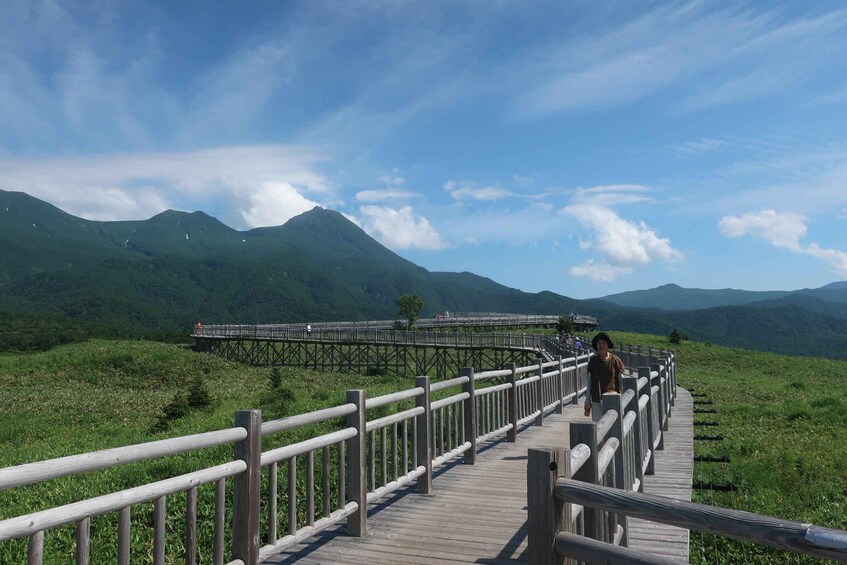
The day’s main walking experience comes at Shiretoko Five Lakes.
From late April through July, follow the elevated boardwalk towards Lake One, enjoying open views of the Shiretoko mountain range without entering the ground trails.
From August through early November, walk the short loop through the forest to Lakes One and Two after the required entry procedure.
Finish at Puyuni Cape, overlooking the coastline near Utoro. When timing and weather align, this final stop offers a beautiful way to watch the light change over the Sea of Okhotsk.
At the end of the day, drop-off is available in the Utoro, Shiretoko-Shari, or Kiyosato area.
Rather than focusing on a single trail, this journey connects the blue waters, forests, waterfalls, mountains, lakes, and coastline that make eastern Hokkaido so distinctive.