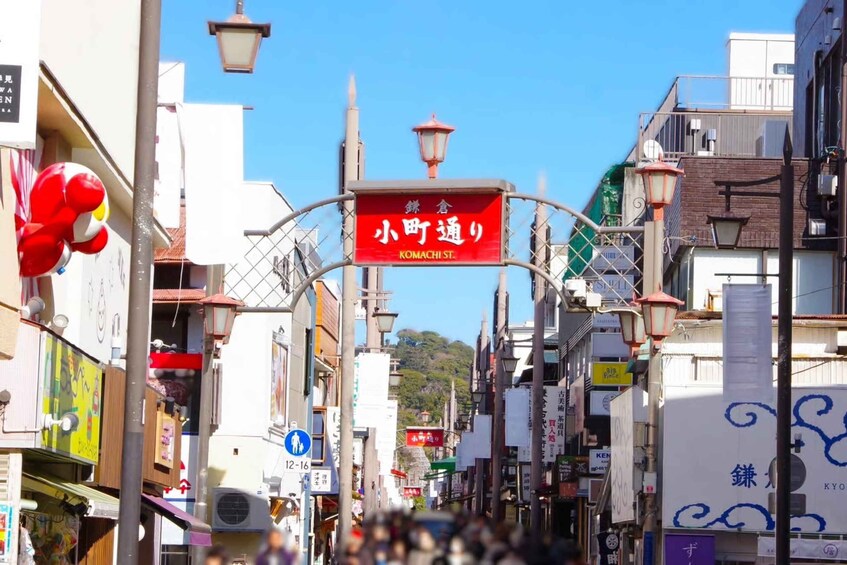
Begin your journey at Kamakura Station and step onto Komachi Street as a food explorer. Your guide will decode the rich culinary heritage of this historic gate-town, providing an expert-led showcase of Kamakura’s most famous treats.
Visit the iconic Kamakura Mameya, a master confectionery shop. Participate in a fun, interactive tasting session where you can sample over 20 unique flavours of traditional Japanese bean snacks—ranging from sweet matcha and black sugar to savoury wasabi, plum, and curry. Learn about Japan’s deeply rooted Omiyage (gift-giving) culture and the craftsmanship behind these tiny delicacies.
As you stroll, your guide will share varieties of iconic local eats: coastal Shirasu (fresh whitebait from Sagami Bay), mouthwatering Hayama beef croquettes, and artisanal hand-roasted senbei (rice crackers). Discover how geography and warrior history shaped the region’s food scene, along with the proper etiquette of Japanese street food.
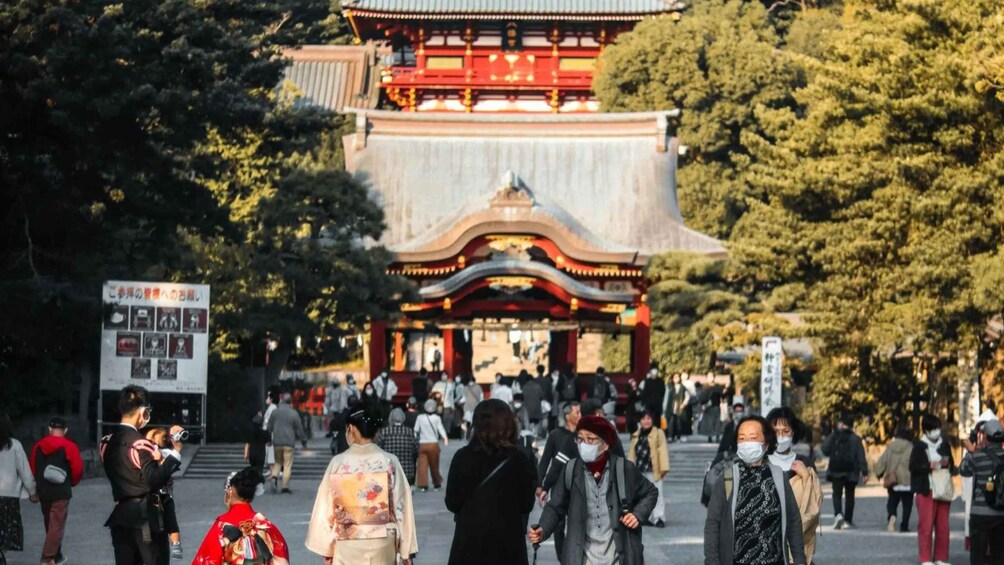
Pass through the grand red torii gate and enter the spiritual epicentre of the Kamakura Shogunate. This is not a simple shrine visit; it is an investigation into the genius and dark side of samurai politics.
Discover how the first shogun, Yoritomo Minamoto, strategically designed Kamakura's grid map based on Feng Shui and military defence. Climb the grand stone steps where infamous political assassinations and power struggles took place among shogun heirs. Learn about the tragic rivalry between Yoritomo and his heroic brother Yoshitsune, the symbolism of the sacred pigeon emblems, and the warrior rituals of Yabusame (horseback archery).
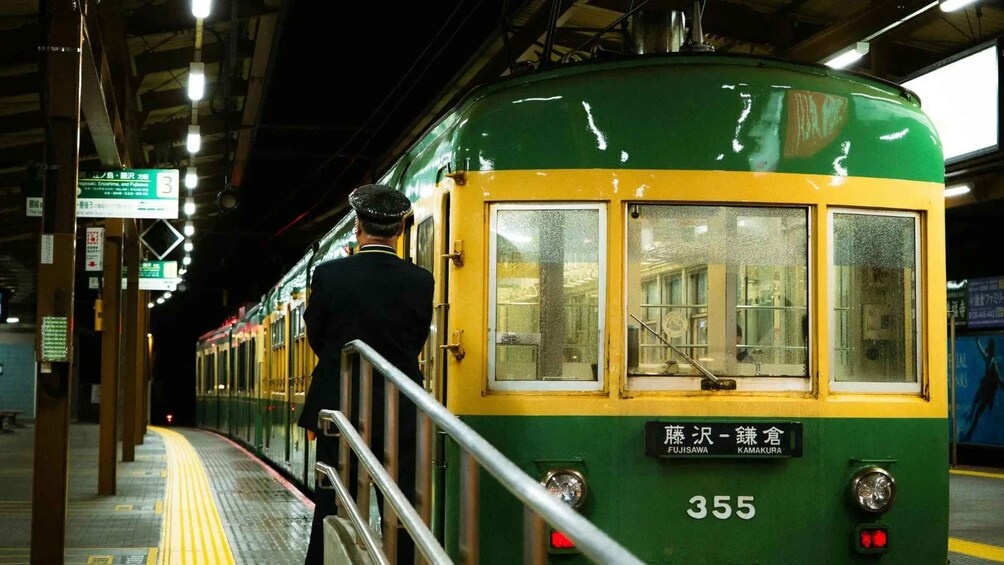
Board the charming, retro Enoden (Enoshima Electric Railway) for a nostalgic short ride through local areas to Hase Station, heading towards the world-renowned Kotoku-in Temple.
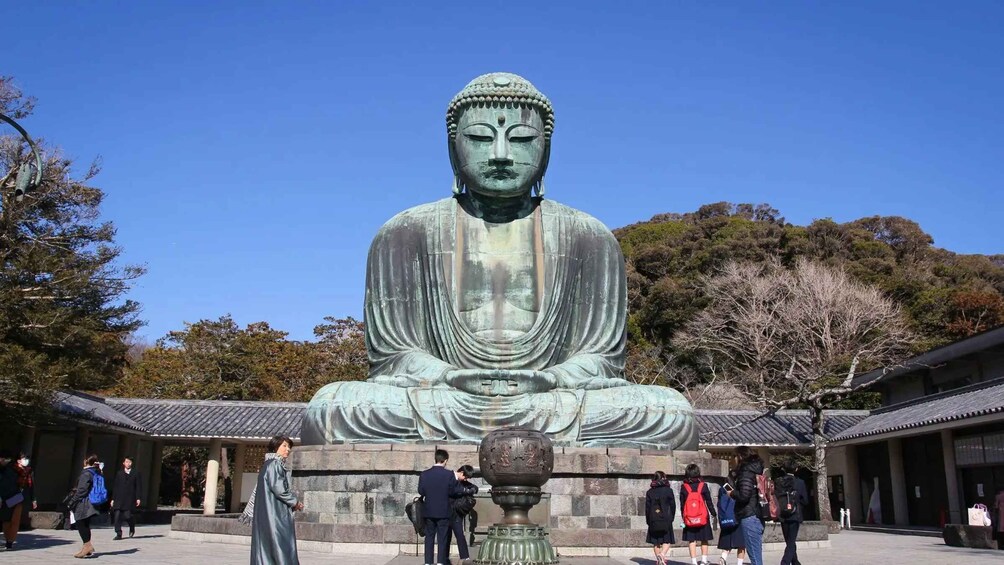
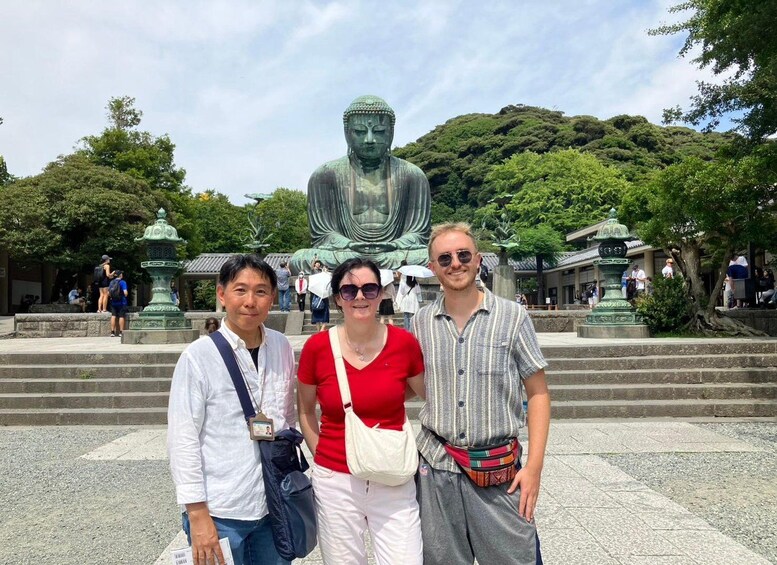
Stand before the colossal 11.3-meter-tall bronze Great Buddha (Daibutsu), cast in 1252. Your guide will unpack the fascinating open-air mystery: why this massive statue sits under the sky rather than inside a hall. Hear the dramatic historical accounts of medieval tsunamis and typhoons that washed away the original wooden temple, leaving the resilient bronze Buddha untouched. Gain deep insights into Pure Land Buddhism, medieval bronze-casting engineering, and step inside the hollow interior of the statue (optional) for a unique structural perspective.